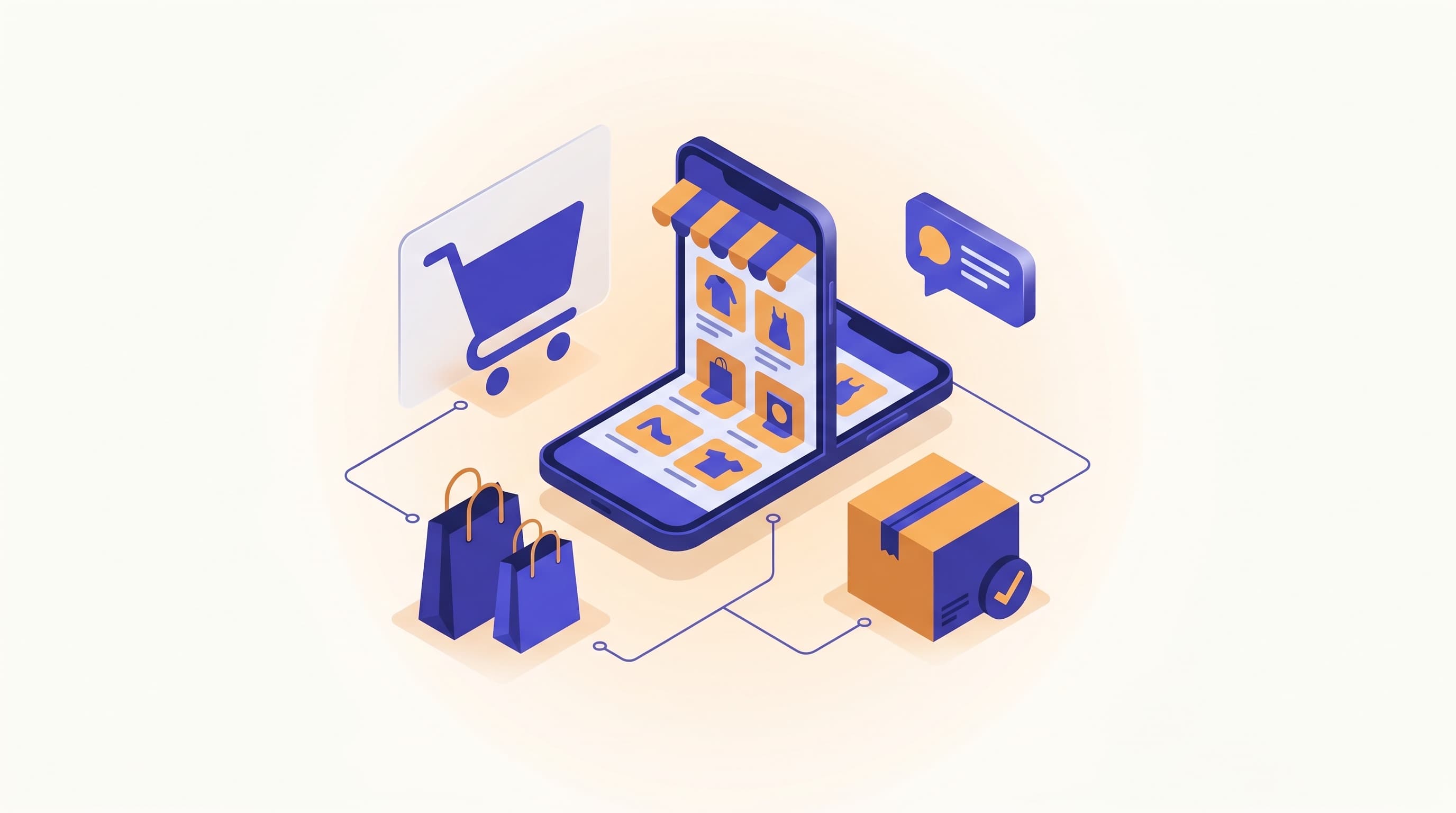
How does an e-commerce business use intusell? A daily operations guide
Training is done; now it's time for operations. From a product question in the DMs to an order, from shipping tracking to returns and handing off to a human — an e-commerce business's daily flow with intusell.
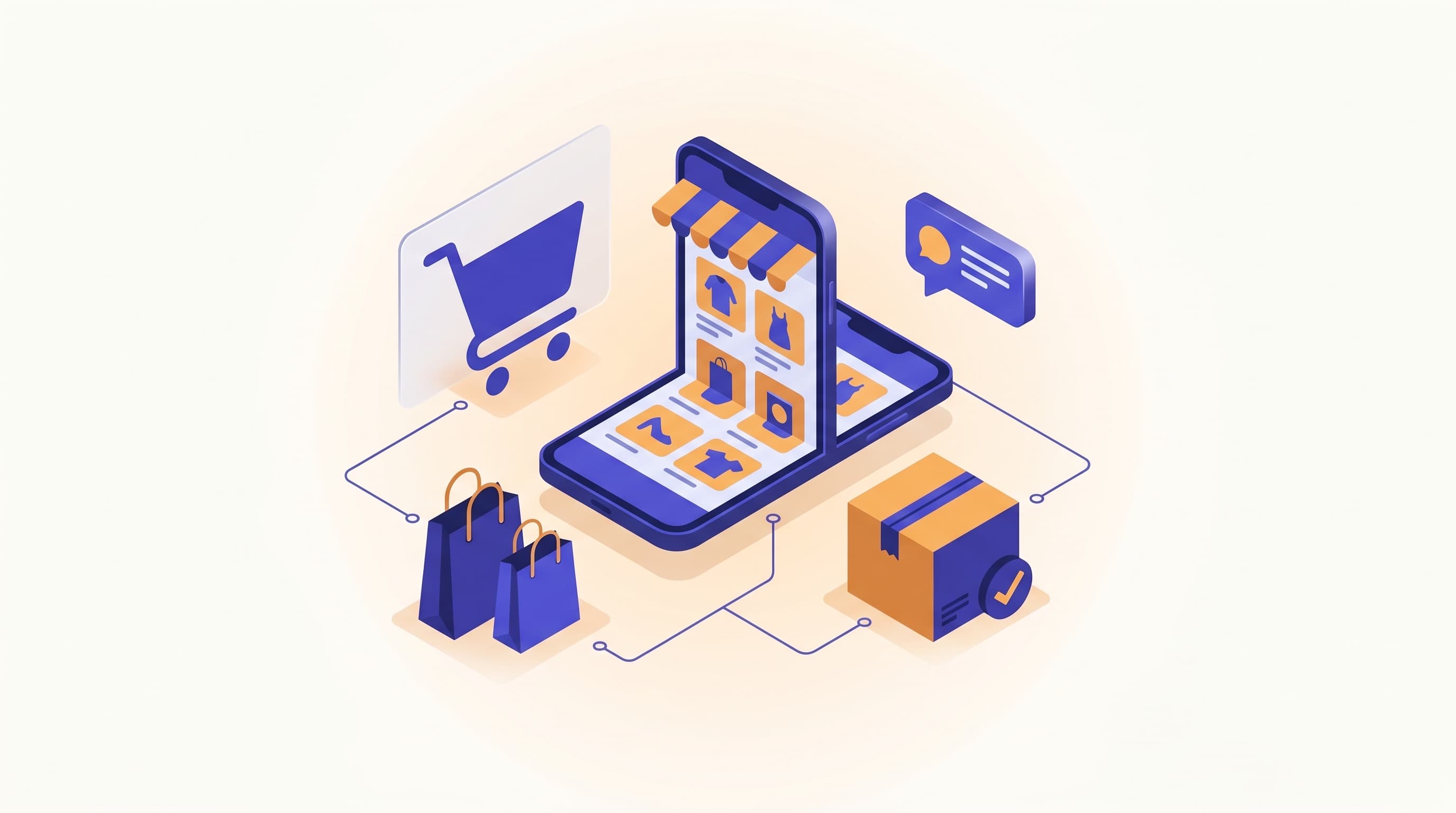
In the first article, you trained the intusell AI: you uploaded your product catalog and FAQs to the knowledge base, marked your sales conversations, and configured the persona and response rules. Training was a one-time setup. Now the real work begins: how does an e-commerce business use intusell — that is, how does an e-commerce business's day-to-day use of intusell actually work? This article walks through, step by step, what the assistant you trained does in the field over a full workday — from the incoming DM to an order, from shipping tracking to returns and handing off to a human.
This article is the second part of the e-commerce section of our sector-by-sector "how to train your AI" series. The first part, how to train the intusell AI, covered the setup; this one covers turning that setup into daily operations.
Quick answer
An e-commerce business uses intusell to answer 24/7 the product, size, stock, shipping, and return questions customers ask via Instagram DM and WhatsApp, to recommend the right product and direct the customer to the cart/checkout, and to re-engage quiet carts with proactive follow-up. The AI does not invent price or stock; it states what it doesn't know and hands the conversation off to the live team. The seller is always the business.
A day in the flow
The typical day of an e-commerce team that has set up intusell is very different from before. In the old days, the customer rep would come in each morning and go through dozens of unread DMs and unanswered comments one by one. Now, the messages that came in overnight are already answered, leads are categorized, and some carts are already recovered. The backbone of a day works like this:
| Time | Customer side | What intusell does |
|---|---|---|
| 02:14 | "Do you have this model in size L?" | Answers stock/size from the knowledge base, directs to the product |
| 09:00 | The team logs in | The leads accumulated overnight are ready in the single inbox |
| 11:30 | "When will shipping arrive?" | Answers the shipping/return policy from the knowledge base |
| 14:00 | Customer stuck at the cart | Directs to the cart, answers the question |
| 16:45 | "Where is my order?" query | Escalates to the live team when off-system data is needed |
| 23:30 | Customer who has gone quiet | Proactive follow-up message, lead kept alive |
The team is now occupied not with scanning messages but with conversations that genuinely require a decision.
Who is it for?
This usage model especially makes sense for e-commerce businesses that:
- Receive heavy product questions via Instagram and WhatsApp — those who can't keep up with dozens of "do you have this, how much is it?" messages a day.
- Lose after-hours demand — operations that miss sales because they respond late to questions coming in the evening and on weekends.
- Have a high volume of recurring questions — brands where size, color, shipping, and return questions arrive in the same pattern.
- Manage many channels with a small team — firms forced to track DMs, WhatsApp, comments, and email separately.
If you have a volume of demand that a single rep can't keep up with, intusell works like a senior salesperson who meets that demand.
Incoming request: the customer asks about a product, the AI recommends a suitable one
The flow starts when the customer sends a message. Imagine someone writes via Instagram DM: "I'm looking for navy sneakers, size 42." The AI reads this message, scans the product descriptions and your catalog in your knowledge base, recommends a product that fits the customer's need, and directs them to the cart/product page.
An important point: the AI responds in whatever language the customer writes in. For brands selling abroad this is critical — a product question that comes in English gets an English reply, with no extra configuration needed.
If you added the "clarify the need before recommending" response rule during training, the AI first asks about size, color, and intended use. Thanks to this rule, the recommendation isn't random; it's based on the customer's real need. We separately explain how all these channels come together in a single inbox in the Instagram and WhatsApp automation article.
Order, shipping, and return questions: answered from the knowledge base
In e-commerce, most incoming messages aren't new sales but recurring operational questions: "How many days does shipping take?", "How do I make a return?", "Is there an exchange on this product?" These questions cycle in the same pattern throughout the day and eat up the rep's time. intusell takes on this load by answering from the knowledge base.
The most critical rule here: the AI does not invent price or stock. It answers only from the source you uploaded to your knowledge base:
| Question type | Where the AI answers from |
|---|---|
| Product, size, color, stock | Catalog and product descriptions in the knowledge base |
| Shipping time, cost | Shipping policy uploaded to the knowledge base |
| Return and exchange conditions | Return policy text in the knowledge base |
| "Where is my order?" (live status) | Off-system data → handoff to the live team |
If information that isn't in the knowledge base is requested — for example, the stock of a size you didn't upload or the live shipping status of a specific order — the AI, instead of inventing information, says it doesn't know and suggests connecting the customer to the live team. This behavior prevents you from giving the customer wrong stock or price information and then having to correct it; this is the foundation of trust.
You'll find a detailed account of this engine — automatically answering everything from order to shipping, from returns to product questions with the knowledge base — in the order and product questions automation article.
How the knowledge base is fed and stays up to date
The AI answering correctly depends entirely on how current your knowledge base is. intusell feeds the knowledge base from several sources and indexes all of them for pgvector-based search (RAG):
- Product catalog: Uploaded as PDF, Excel, or CSV; product names, descriptions, size/color options, and policy texts come from here.
- Web URL: You provide the address of your returns page, shipping FAQ page, or product pages; the content is fetched and indexed.
- Free text: You type notes like "the X campaign applies this season" directly into the panel.
Stock and price are a frequently changing area; that's why you refresh the knowledge base when you update your catalog. The AI always speaks according to the latest source you uploaded — if the source isn't current, the AI won't be either, which is why catalog freshness is the backbone of operations.
Recovering the cart: proactive follow-up and CRM
In e-commerce, most sales dissolve among customers who add a product to the cart, say "let me think about it," and disappear. intusell doesn't forget these leads. Customers who get information or get stuck at the cart and then go quiet receive a proactive follow-up message; the lead is kept alive. Every conversation is logged into the CRM, so the customer's history, which product they were interested in, and what stage they're at stay on record.
Here a boundary needs to be clear: intusell does not maintain a managed "waiting list." What it does is offer an opportunistic re-offer to eligible WhatsApp customers in follow-up — for example, a reminder in the tone of "The item in your cart is still available, can I help?" to a customer who left it in the cart. This way, when you sit down to operations in the morning, it's clear which lead is hot and which is awaiting follow-up. You don't need to keep a manual reminder list.
Appointment and reservation flow (if needed)
Most e-commerce flows revolve around orders, but some businesses also use appointments/reservations: a showroom visit, a product consultation call, an installation/assembly appointment, or a trial session. intusell's universal appointment engine works in these cases too.
The AI doesn't give times off the top of its head; it looks at the working hours and the busy slots you defined during training, and if it finds a suitable slot, it creates the appointment. For each appointment, an automatic reminder (for example, 1 day and 2 hours before) goes out, and the customer manages their appointment themselves via a /manage-appointment/{token} link — cancellation or rescheduling is done in one click. Appointments are copied one-way to Google Calendar (intusell → Calendar); the team sees them in their own calendar. This module can be enabled on any plan; if you don't need it, you simply don't use it.
Handing off to a human: lock modes
You decide how autonomously the AI works. There are three lock modes:
| Mode | Behavior | When |
|---|---|---|
| ai_only | The AI handles all conversations | Busy periods, campaigns, when you want full autonomy |
| hybrid | The AI runs the normal flow and escalates when needed | Ideal for most stores |
| human_only | All conversations go to the live team | Sensitive periods, special situations |
In hybrid mode, the AI hands off a "where is my order?" query it can't answer or an off-knowledge-base request to the live team. At the moment of handoff, the full history of the conversation is in front of the team; the customer doesn't have to explain from scratch. You can change the mode at any time — for example, ai_only on a campaign day, human_only in a sensitive complaint flow.
One additional note: when a customer sends a file like a product photo, an invoice, or a shipping label, that alone is not a reason to hand off to a human. The AI receives the attachment, understands the context, and continues the flow; it only escalates if there genuinely is a situation that requires a decision.
Reports: what's working, what to fix?
For operations to be visible, you track basic metrics in the panel. How many messages came from which channel, how many were answered by the AI, how many were handed off to a human, which questions recur the most — seeing these serves two purposes:
- Finding knowledge base gaps: If there's a topic the AI frequently says "I don't know" about and hands off, that information is missing from the knowledge base; once you add it, the handoff rate drops.
- Improving response rules: You review the tags and correct misclassified conversations; the AI learns from these corrections. If you wish, you compare two different response approaches with an A/B test.
So reports aren't just a summary, they're the feedback loop for sharpening the assistant over time.
What it isn't
To place intusell in the right category, let's clarify what it isn't:
- It's not a chatbot. It's not a flow bot that answers from preset templates; it's a fully autonomous AI sales assistant that works with the knowledge and sales techniques you trained.
- It's not an e-commerce platform / payment provider. It doesn't replace your store; it directs to your catalog and your checkout page, and the seller is the business.
- It's not a stock and price source. It doesn't invent information; it speaks only from the source you provide, says what it doesn't know, and hands off.
- It's not an e-commerce-specific priced product. The pricing model is based on messages and voice minutes; it doesn't change by sector. Modules can be enabled on any plan.
So you don't start with the wrong expectation, let these boundaries be clear from the outset. For product and pricing details, see the solutions and pricing pages.
Frequently asked questions
Does the AI complete an order on its own?
The AI recommends the product, answers size/color/stock questions from the knowledge base, and takes the customer all the way to the payment step. In most setups, payment is completed via the store's own checkout page or a cart link. In risky or off-knowledge-base situations, it hands the conversation off to the live team. Final approval can always stay with the business.
Does the AI invent stock and prices?
No. The AI states price and stock status only from your knowledge base and the source you provide. It does not invent a size, color, or stock detail it doesn't know; it says it doesn't know and hands off to the live team. This is the most important trust rule.
How does it answer shipping and return questions?
Shipping times, return conditions, and the exchange policy are uploaded to your knowledge base; the AI answers these recurring questions from the source. When something off-system is needed — an order code, a carrier API, or live shipping status — it hands the conversation off to the live team.
Can a customer be connected to a human?
Yes. In hybrid mode the AI runs the normal flow and escalates the conversation to the live team when needed. In human_only mode all conversations go straight to the team, and in ai_only mode the AI handles everything. You can change the mode at any time.
What happens to a message that comes in at night?
The AI responds 24/7. A "do you have this size?" question that arrives at 02:00 gets an answer from the knowledge base within seconds; when appropriate, it directs the customer to the cart. When you open up in the morning, ready leads and answered questions are waiting for you.
Which channels does it bring into a single inbox?
WhatsApp, Instagram DM, Facebook Messenger, Telegram, web chat, and email come together in a single inbox. Instagram comment automation is rolled out gradually depending on Meta approval; the first step is WhatsApp and Instagram DM.
Next step
If you haven't trained your assistant yet, start with the how to train the intusell AI article first — the foundation of this operation is built there. If you want to go deeper on the channel side, you can move on to the Instagram and WhatsApp automation article, and for automating order and product questions, the order and product questions automation article. You can see the e-commerce solution page and the whole series on the all articles page.
To see live how it would work at your own store, request a demo or write directly to hello@intusell.com. In a 20-minute session, we open your inbox together and test the first response in the system.
You read the blog — now see it live.
Test intusell live with your own sector scenario in a 20-minute demo.
Related posts
View all
How does an e-commerce brand train the intusell AI? A step-by-step guide
Automating order, shipping, return and product questions with the knowledge base in e-commerce