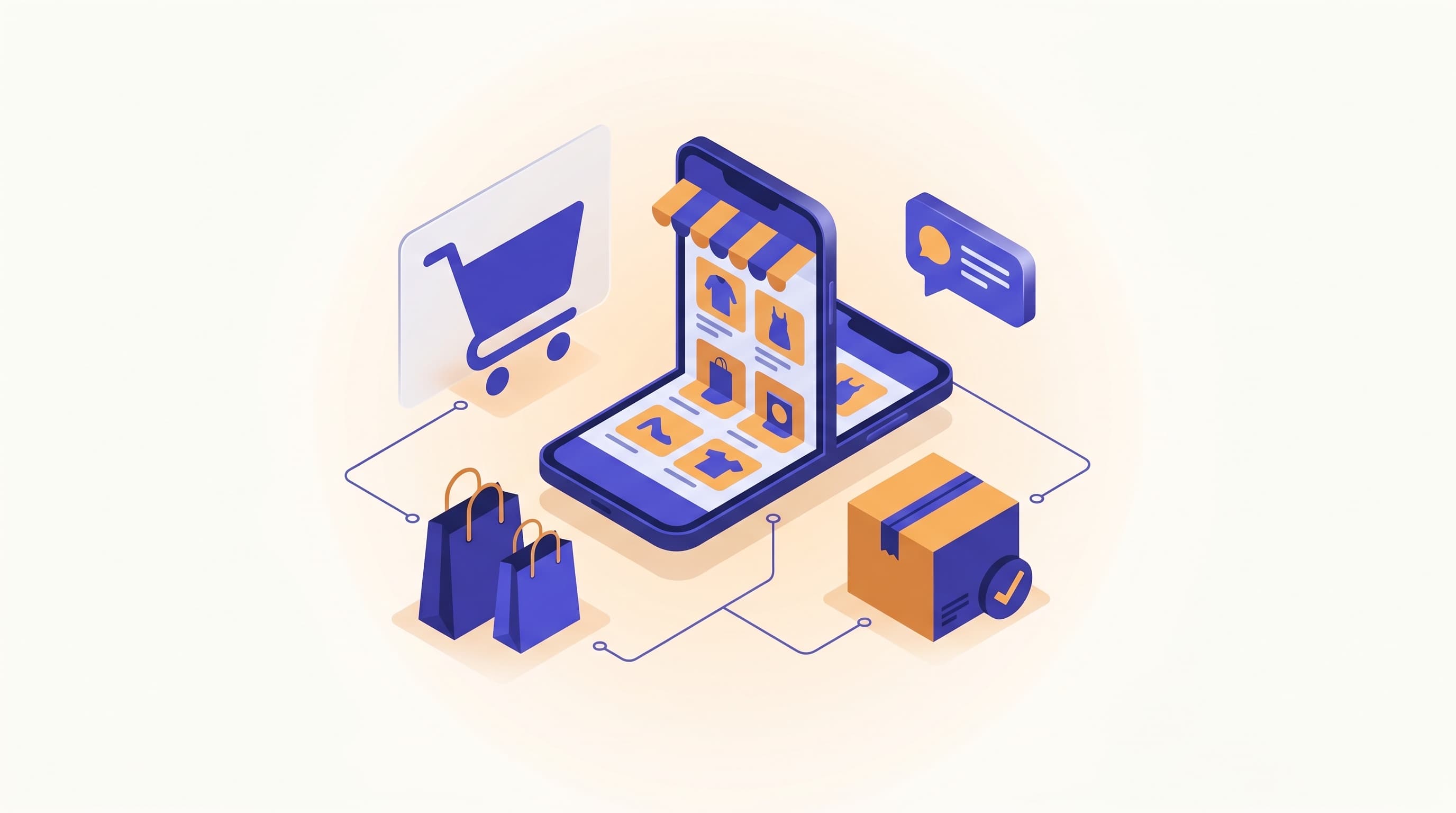
How does an e-commerce brand train the intusell AI? A step-by-step guide
E-commerce AI training in 5 steps: knowledge base, persona, response rules, past sales conversations, and label review. A no-code setup done from the panel.
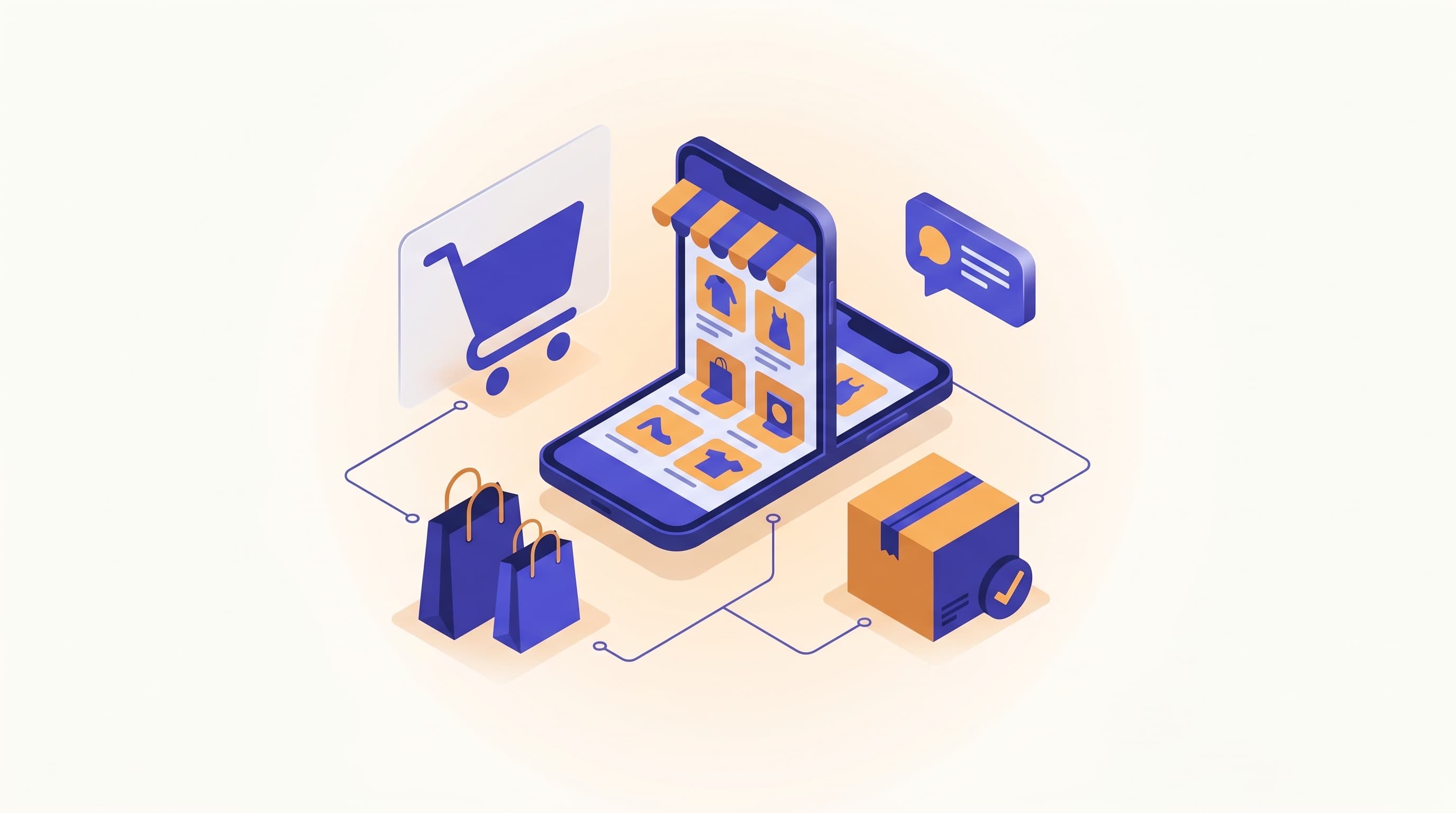
An e-commerce brand's inbox is always full of the same questions: "When does shipping arrive?", "Will this size fit me?", "How do returns work?", "Is it in stock?", "Where is my order?". Dozens of comments pile up under a single product, dozens of size questions land in DMs, dozens of tracking requests hit email. The team abandons its real job — closing a new customer — to churn out copy-paste answers all day. A customer writing from abroad waits for hours. The "I'll buy right now, is there a discount?" message that arrives at 11 PM waits until morning, and the customer buys elsewhere.
intusell takes over this load. But to do that, it first needs to learn your brand, your products, and your sales style. This article explains how an e-commerce brand trains the intusell AI from scratch, step by step. This is the e-commerce chapter of our sector-based "how to train your AI" series, and it is the series' main article.
Quick answer
An e-commerce brand trains intusell from the panel in 5 steps: upload product/shipping/return information to the knowledge base, set the persona and tone, write response rules, teach from past sales conversations, and open the channels. The AI uses only what you upload; it doesn't fabricate what it doesn't know — it says so honestly and hands off to the team.
Why does training matter?
intusell is not an off-the-shelf chatbot; it is a fully autonomous AI sales assistant that behaves like an experienced online sales advisor. An experienced salesperson doesn't start on day one without knowing your store: they need to know which products you sell, your shipping and return routine, and which questions to leave to the team. Training ensures the AI does two things correctly: give the right information (product details, shipping times, return terms) and give it the right way (your brand voice, tone, and sales discipline).
An untrained assistant either gives overly generic answers or guesses on a topic it doesn't know. In e-commerce, guessing is costly: a wrong shipping time brings complaints, made-up stock means cancellations and returns, and a wrong price loses the customer. A well-trained assistant stops when it doesn't know, says so honestly, and connects to the live team — talking correctly and staying silent in the right place.
Who is it for?
This guide is for e-commerce teams whose inbox is dominated by product and order questions and who answer the same things over and over:
- Brands selling through their own site, Shopify, WooCommerce, or a marketplace
- Fashion, cosmetics, accessories, and home-goods sellers getting dozens of DMs and comments a day from Instagram and WhatsApp
- Everyone overwhelmed by message volume, from a one-person team to a 10-person support department
- Brands selling abroad that need to communicate in multiple languages
- Those who want to re-engage customers who stall at checkout or say "let me think" and disappear
You don't need a technical team. All of the steps below are completed from sections in the panel, without writing code.
The structure of training: 5 core steps + 2 continuous steps
Splitting the training into two groups makes your job easier. The first 5 core steps get the assistant up and running; these steps are the one-time part of the setup. The 2 continuous steps that follow (label review and opening channels) are the ongoing part that you sharpen as you use the assistant. You'll find all of them in order below.
1. Upload the knowledge base
The foundation of training is the knowledge base (RAG). In the panel's Knowledge Base section, you upload all of your brand's textual information. Each time the AI generates a response, it searches these sources and uses only the information written there. This is the technical answer to the "don't let the AI make things up" worry: the AI talks about whatever you hand it.
Supported source types:
| Source type | Typical content | Example |
|---|---|---|
| Shipping/return policy, product catalog | "Return and exchange terms.pdf" | |
| Excel / CSV | Product list, price, size chart | "Products and sizes.xlsx" |
| Web URL | FAQ, product, and policy pages on your site | "/shipping-and-delivery" |
| Free text | Frequently asked individual questions | "Is cash on delivery available?" |
Every file you upload is automatically chunked and made searchable with pgvector. When you upload a size-chart CSV, the AI finds the right row and responds when a customer asks "Which size for 1.70 m and 65 kg?".
What an e-commerce brand must upload: product descriptions and specifications, shipping times and fees, return/exchange terms, size charts, payment methods (cash on delivery, installments), campaign rules, and the most frequently asked questions. Once these are in, a large part of your inbox becomes answered automatically.
An important note: if your catalog changes often (new products, prices, stock), keeping the knowledge base current is up to you. When you upload the updated file, the AI uses the new information in its next response. The AI won't present a price from an old file as "current"; it knows whatever you give it, and it says what it doesn't know.
2. Set the persona and tone
You taught the AI what to say in the first step; now you'll define how it will say it. There are two settings in the panel:
- Assistant name (
ai_persona_name): The name it will introduce itself with to the customer. Most brands use a real advisor's name from the team or a name consistent with the brand. - Tone (
ai_tone): Whether it speaks warm and friendly, corporate and crisp, or fast and energetic.
A young streetwear brand and a boutique jewelry brand won't share a tone. The first might speak casually, with humor; the second, elegantly and formally. This setting is reflected in the AI's message style on every channel; the tone in an Instagram DM stays consistent with the tone in an email.
A multilingual note: The AI responds in whatever language the customer writes in. When a customer from abroad writes in English or German, you do nothing extra; the assistant detects the language and responds in it while preserving your tone.
3. Define the response rules
The persona defines "who it is," and the response rules define "how it will behave." This is where you convey your sales discipline to the AI. With the AI Manager Chat, you add rules by writing in plain language, just as you would instruct a teammate.
Typical rules for e-commerce brands:
- "If you're unsure about price, stock, or shipping information, don't make it up; say you don't know and hand the conversation off to the team."
- "If the customer is undecided, suggest a size/product, but don't apply pressure."
- "When asked about returns/exchanges, read the policy from the knowledge base clearly; add no commentary."
- "Share a discount code only for defined campaigns; don't invent a discount on your own."
- "If the customer gives an order number, direct them to the team for tracking." (Order status is kept in a live system.)
The most common mistake in e-commerce is the AI guessing just "to say something," and that turning into a cancellation, a return, or a bad review. In intusell, this boundary is two-layered. The primary control is the system prompt given to the AI: from the start, the AI is constrained so it won't step outside the knowledge base and invent price/stock. On top of that, a safety layer scans responses and flags risky phrasing. This layer runs in "shadow" mode by default: it detects and flags, but it does not hard-block the response. In other words, the system's reliability comes not from "a wall that blocks everything," but from the AI being correctly constrained from the start.
To compare two approaches, you can use the A/B test feature: put a softer suggestion next to a more direct closing line at 50%-50% traffic and measure which one converts to more sales.
4. Teach from past sales conversations
This is the step that moves training from "good" to "specific to your brand." In the panel, you upload audio recordings of your past sales conversations (MP3, MP4, WAV, M4A) and mark each one as Won or Lost — for example, whether the customer completed the order or left it in the cart.
The system uses these recordings in two ways:
| Recording type | What the AI learns |
|---|---|
| Won conversations | Sales style: recommending the right product, handling objections, going for the close at the right moment |
| All conversations | Product, shipping, return, and FAQ information (fed into RAG) |
This way, the AI learns how your best salesperson explained value to someone who said "it's too expensive" and moved a "let me think about it" toward an order. The KVKK side is protected: PII (personal data) masking and explicit consent are applied to the uploaded recordings.
This step is not mandatory, but don't skip it. The knowledge base teaches the AI "what" it knows; past conversations teach "how you sell." Combined, the assistant truly resembles an experienced online sales advisor.
5. Correct with label review (continuous step)
The first four steps get the AI up and running. From here on is the continuous part that perfects it over time. Every AI response lands in a label review queue. Here you can do three things: approve, reject, or correct.
The AI learns from these corrections. Say it explained a shipping time incompletely or referred to a product by the wrong name; you correct it, and in similar cases it will use the right wording. Over time, patterns specific to your brand build up (the product names you use, your standard campaign sentences, your return-directing style).
For the first two weeks, we recommend spending 10-15 minutes a day on this queue. The correction rate drops quickly, because the AI learns the frequently made mistakes. Review is the "live" part of training: the system gets smarter as it is used.
6. Open the channels (continuous step)
Once training is ready, you put the assistant in front of customers. intusell gathers all channels in a single inbox: WhatsApp, Instagram DM, Instagram comments, Facebook Messenger, Telegram, Web Chat, and email. Whichever channel a customer writes from, the same trained assistant responds with the same information.
Channel-opening methods:
- Meta channels (Instagram, Messenger): connect with one-click OAuth.
- WhatsApp: connects in about 1 minute by scanning a QR code from your phone — no Meta Business approval required. The official Cloud API option is also available.
As a first step, we recommend opening WhatsApp and Instagram DM; these are approved and usable right away. Instagram comment automation (the "price?", "in stock?" comments under product posts) opens gradually, subject to Meta approval. The channel gates are separate — the DM gate (instagram_dm_enabled) is independent of the comments gate (instagram_comments_enabled) — so you can automate only DMs first and open comments once approval comes through.
There are working modes for handing off to a human: ai_only (the AI answers everything), human_only (everything goes to the live team), hybrid (the AI normally answers and escalates when needed). Most brands start with hybrid; the AI handles recurring product and order traffic, and sensitive cases go to the team. One note: a file, image, audio, or video attachment arriving is not, on its own, a reason to hand off; the AI tries to make sense of the attachment and only hands off when it can't complete the task.
After you open the channels, CRM and proactive follow-up kick in: for eligible WhatsApp customers in follow-up who said "let me think" and disappeared or stalled at checkout, the assistant can bring an opportune re-offer — the part of e-commerce that leaves the most money on the table but is the most neglected. All the details of daily operations — from incoming message to sale, follow-up, and handoff — are in a separate article: how an e-commerce brand uses intusell.
How long does training take?
A working setup takes half a day:
- Uploading the first files to the knowledge base: 1-2 hours (shorter if your existing documents are ready)
- Persona, tone, and first response rules: 30 minutes
- Connecting channels: 1-5 minutes per channel
- First test conversations: 30 minutes
But there is no moment of "training is done." Over the first two weeks, as you approve and correct responses in the label review queue, the assistant sharpens to fit your brand. Setup is fast; mastery is continuous.
What it isn't
Putting intusell in the right category matters, because the wrong expectation leads to the wrong setup.
- It is not a chatbot that gives canned answers. It is not a decision tree but an autonomous sales assistant that represents your brand to the extent you train it.
- It is not a tool that fabricates price/stock. It uses only the information you upload; it says what it is unsure about and hands off to the team. This is the most important trust message.
- It is not an e-commerce platform (Shopify/WooCommerce) or a payment system. It does not replace your store; the one closing the sale and issuing the invoice is always you, and intusell is not a party to payment.
- It is not a managed "waitlist" service. It is not a system that sends a bulk notification when stock arrives; it is an assistant that brings an opportune re-offer to eligible customers in follow-up.
In short: not a bot that spits out an answer to a single question, but a sales assistant that represents your brand to the extent you train it — while never fabricating what it doesn't know.
Frequently asked questions
How long does e-commerce AI training take?
A working setup is completed within half a day: uploading the knowledge base, setting the persona and tone, a few response rules, and connecting channels. The real refinement builds up over the first weeks as you approve and correct responses in the label review queue. Training is not one-time; it is continuous.
Do I need technical knowledge to train the AI?
No. All training is done from the panel; no code, API key, or developer is required. You upload PDF/Excel/CSV files to the knowledge base, add your web URLs, choose the persona, and write response rules in plain language. You connect channels with one-click OAuth or by scanning a QR code.
Does the AI give wrong or made-up product/stock/price information?
No. The AI uses only the information you upload to the knowledge base; it does not invent a price, stock status, or shipping detail it is unsure about. When it does not know, it says so honestly and hands the conversation off to the team. This is the behavior that earns the most trust in e-commerce.
Which channels can I connect?
WhatsApp, Instagram DM, Instagram comments, Facebook Messenger, Telegram, web chat, and email are gathered in a single inbox. Meta channels connect with one-click OAuth; WhatsApp connects in about 1 minute by scanning a QR code from your phone. Instagram comment automation opens gradually, subject to Meta approval.
Can the AI answer order, shipping, and return questions?
Yes. Once you upload shipping times, return/exchange terms, the size chart, and product details to the knowledge base, the AI answers these recurring questions automatically. In a case outside policy or one it is unsure about, it adds no commentary; it hands off to the team. For details, see automating order, shipping, return, and product questions.
Is my data safe under KVKK/GDPR?
Yes. intusell is end-to-end encrypted and KVKK/GDPR-compliant. PII (personal data) masking and explicit consent are applied to uploaded audio recordings; customer data is kept isolated per tenant.
Next step
You've trained your assistant; next comes using it in daily operations. The next article in the series explains how to run the intusell you trained on a real workday: incoming product questions, cart recovery, shipping tracking, returns, and handing off to the team. Continue straight from there: how an e-commerce brand uses intusell. For the details of channel setup, the Instagram and WhatsApp sales automation article is also ready.
This guide was written for e-commerce, but the same 5-step logic works in every sector. You can also take a look at the main articles for neighboring sectors: AI training for real estate, AI training for tour agencies, and AI training for clinics. If you'd like to see a setup tailored to your brand live, use Request a demo and we'll open your panel together in a 20-minute session, or write to hello@intusell.com. You can find the full set of e-commerce capabilities on the e-commerce solution and solutions pages, package and quota details on the pricing page, and other guides in the all articles list.
You read the blog — now see it live.
Test intusell live with your own sector scenario in a 20-minute demo.
Related posts
View all
Automating order, shipping, return and product questions with the knowledge base in e-commerce
How does an e-commerce business use intusell? A daily operations guide